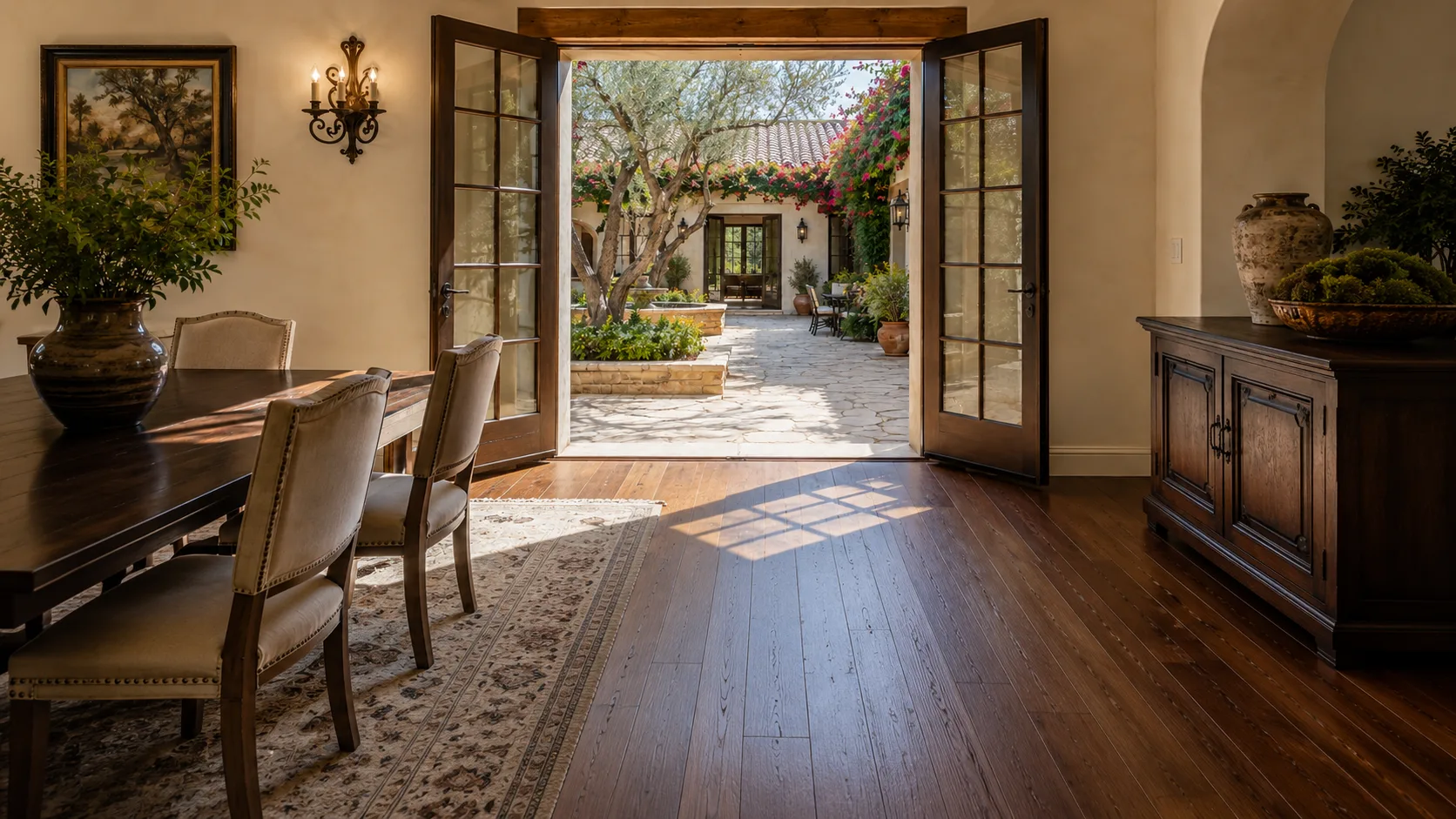
Your Guide to French Door Installation in Orange County
Everything Orange County homeowners need to know about French door styles, materials, costs, and choosing the right contractor for your home.
If you're researching French door installation in Orange County, you're in good company. More OC homeowners are choosing French doors than ever — and for good reason. These hinged, glass-paneled doors create a visual connection between indoor and outdoor spaces that's hard to match with any other door style. Whether you're replacing an existing patio opening or adding French doors to a dining room, the decision involves more than picking a look you like. Material, size, glass type, and contractor selection all shape the outcome. This guide covers everything you need to know before you get started. When you're ready, you can connect with a licensed Orange County contractorthrough our platform.
Why Orange County Homeowners Choose French Doors
Southern California's climate is one of the best arguments for French doors. With mild temperatures year-round and an outdoor-living culture built into the local lifestyle, the boundary between inside and outside is something most OC homeowners want to soften — not reinforce. French doors do exactly that. Opened wide, a pair of French doors can visually extend a living room or kitchen into a patio or garden space, making smaller square footage feel more generous.
There's a practical side to it too. Natural light reduces the need for artificial lighting during the day. The glass panels let you see your backyard without having to open the door, which matters if you have kids or pets. And from a resale standpoint, well-installed French doors are a value-positive upgrade — buyers respond to them, particularly in the mid-to-upper price brackets common across OC's coastal and hillside neighborhoods.
French doors also tend to satisfy HOA architectural guidelines more easily than some other opening styles, because they read as traditional and balanced. If you're in a community with strict exterior standards, French doors are often a low-conflict choice.
Styles and Configurations
The term "French doors" covers a range of configurations. Understanding the differences helps you narrow down what actually makes sense for your space.
- Single French door: One hinged panel, typically 24–36 inches wide. Less common as an exterior door, but works well for interior applications or narrow openings. Not ideal if you want a wide, open-air feel.
- Double French doors (true French): Two hinged panels that meet in the center, typically spanning 60–72 inches total. This is the classic configuration — symmetrical, elegant, and fully openable on both sides. Works for patio, garden, or side-yard access.
- Sliding French doors: A hybrid design where French-style glass panels slide on a track rather than swing. Useful when swing clearance is limited. These are sometimes called "French sliding doors" or confused with standard patio sliders, but the detailing is more refined.
- Inswing vs. outswing: Exterior French doors can be configured to swing inward or outward. Outswing doors are generally more weather-resistant (the door compresses against weatherstripping when closed), but require exterior clearance. Inswing doors are more common in interior-climate regions.
If you're also considering a wider opening with multiple panels, take a look at our patio door installation guide, which covers multi-panel and pocket systems.
Choosing the Right Material for Orange County's Climate
Material choice affects durability, maintenance, energy performance, and cost. All four common French door materials work in OC's climate — but they perform differently depending on your proximity to the coast, your HOA's aesthetic standards, and how much maintenance you're willing to take on.
| Material | Climate & Maintenance | Typical Price Range |
|---|---|---|
| Wood | Good inland; higher maintenance near the coast due to salt air and humidity. Upkeep is high — periodic refinishing, sealing, and inspection. | $3,000–$12,000+ |
| Fiberglass | Excellent — resists warping, moisture, and salt air; ideal for coastal properties. Upkeep is low — occasional cleaning, no refinishing. | $2,200–$9,000+ |
| Vinyl | Good — weather-resistant and energy-efficient; may not suit higher-end aesthetics. Upkeep is very low — wipe clean, no painting or sealing. | $1,400–$4,800 |
| Aluminum-Clad Wood | Excellent — wood interior warmth with aluminum exterior protection. Upkeep is low outside; interior wood may need occasional care. | $5,000–$12,000+ |
For most OC homeowners who want longevity without a high-maintenance commitment, fiberglass is the most practical choice. Modern fiberglass doors have improved dramatically — the better lines are virtually indistinguishable from wood at a distance, and they hold up well in the coastal humidity that accelerates wood degradation. Aluminum-clad wood is the choice when you want a genuine wood interior look and feel and are willing to pay for it.
What Does French Door Installation Cost in Orange County?
The honest answer is: it depends on a lot of variables. That said, here's a realistic range based on what OC contractors typically charge for residential projects:
- Standard installation (existing opening, mid-range fiberglass or vinyl):$2,200–$4,800 all-in
- Mid-range project (some framing adjustment, quality fiberglass or entry-level wood): $5,000–$8,000
- Higher-end project (new opening, aluminum-clad or custom wood, decorative glass, specialty hardware): $8,000–$12,000+
Labor typically runs $500–$1,500 depending on project complexity and whether structural work is involved. Permit fees add another $100–$400 in most OC cities. Glass upgrades — tempered, low-E, decorative lites — can add $200–$1,000 to the door unit cost. For a full breakdown with city-specific notes, see our Orange County door installation cost guide.
What to Expect During Installation
Understanding the process helps you plan around it and know what questions to ask your contractor.
- Measure and order: Your contractor measures the rough opening and orders the door unit. Lead times vary — stock sizes can ship in days; custom orders may take 3–8 weeks.
- Permit pull: For exterior installations, your contractor pulls a building permit from your city's building department. In most OC cities, this takes 1–3 weeks for residential projects.
- Demo: The existing door (and possibly surrounding trim, drywall, and framing) is removed. If the opening is being widened, a structural header may need to be added — this is a meaningful cost and time driver.
- Frame and set: The new door unit is installed in the rough opening, shimmed level and plumb, and anchored to the framing. This step is where craftsmanship matters most — an improperly set door will never operate correctly.
- Seal and trim: Weatherstripping, threshold, interior and exterior trim, and caulking are installed. Proper sealing is essential for energy performance and water intrusion prevention.
- Inspection: For permitted work, a city inspector confirms the installation meets code before sign-off.
Energy Efficiency and California Title 24
California's Title 24 energy code applies to door replacements in most circumstances. In practical terms, this means your new French doors will need to meet minimum U-factor and solar heat gain coefficient (SHGC) requirements. Most modern fiberglass and vinyl French doors with low-E glass satisfy these requirements without special ordering. Your contractor should be able to confirm compliance before purchase. On the upside, Title 24-compliant doors are genuinely more comfortable — low-E glass keeps rooms cooler in summer without sacrificing natural light, which is a real benefit in OC's climate.
How to Choose the Right Contractor
This is where most homeowners make their biggest mistake — choosing on price alone. Here's what actually matters:
- California contractor's license: Verify the license number through the CSLB online lookup. The license should be active and in good standing, with no disciplinary actions.
- Insurance: General liability and workers' compensation. Ask for a certificate of insurance before work begins — if a worker is injured on your property without coverage, you could be liable.
- OC experience specifically: Local contractors know which permit offices move quickly, which HOA architectural committees are strict, and the typical framing conditions in OC's housing stock (stucco exteriors, slab foundations, tract construction). This local knowledge matters more than it sounds.
- Permit handling: A reputable contractor pulls permits — they don't suggest skipping them. Unpermitted door work can cause complications when you sell your home.
If you're also navigating HOA requirements, our HOA door replacement guide walks through the approval process in detail.
Exploring Other Door Options
If you're specifically focused on an outdoor-facing opening, our exterior French door guide covers the weather seals, security hardware, marine-grade materials, and Title 24 considerations specific to exterior applications — including what separates exterior-grade French doors from interior models.
French doors are the right fit for many projects — but not every opening. If you're working with a wider span (more than 8 feet), a sliding door system may be more practical. For maximally open indoor-outdoor transitions — the kind that connect a great room directly to an outdoor living area — bi-fold doors or multi-slide configurations offer panel counts and opening widths that traditional French doors can't match. Explore our patio door installation guide for a comparison of these wider-format systems alongside French door options.
If you already have French doors and they're showing their age — fogged glass, drafts, or difficult operation — our door replacement guide covers the signs it's time to replace, what the process involves, and how to approach it as an energy and value upgrade.
Get matched with a trusted contractor today
We connect Orange County homeowners with one experienced, licensed contractor — rather than a pool of competing bids. Your project deserves full attention — from design and door selection through ordering and installation.
- Typically matched to one contractor — not circulated to a pool of competing bidders
- All contractors licensed, bonded & insured in California
- You'll hear back quickly — usually within one business day
- 100% free — no obligation, no pressure
What best describes your project?
This helps us match you with the right contractor.
What type of doors are you interested in?
Select all that apply.
Prices reflect Orange County averages. Custom or high-end installations may exceed these ranges. Your contractor will provide a detailed quote. Estimates include the door and professional installation. Your contractor can help you choose the right door for your home and budget.
When are you looking to get started?
No pressure — this just helps us prioritize.
Tell us a little about yourself
Your contractor will reach out to discuss your project.
Have photos of your current doors or space?
Tap to upload (JPG or PNG)
You’re all set!
Your matched contractor will reach out to discuss your project. Your information has not been shared with anyone else.